


What's your question?
  1. The permissibility of insurance (Takaful) in Islam can vary depending on the specific type of insurance and how it is structured. In general, conventional insurance involving interest (riba) and gambling (maysir) is considered haram (forbidden) in Islamic finance principles. This is because it involRead more

    The permissibility of insurance (Takaful) in Islam can vary depending on the specific type of insurance and how it is structured. In general, conventional insurance involving interest (riba) and gambling (maysir) is considered haram (forbidden) in Islamic finance principles. This is because it involves elements that are contrary to Islamic ethics.However, Islamic insurance, known as Takaful, is designed to comply with Islamic principles. In Takaful, participants contribute money into a common fund to help each other in times of need, and any surplus is distributed in a way that avoids interest and gambling. Takaful is generally considered halal as it aligns with Islamic principles of cooperation, risk-sharing, and social responsibility.It’s important to note that the permissibility of specific insurance products can still be a subject of debate among Islamic scholars, and interpretations may vary. It’s advisable to consult with a knowledgeable Islamic scholar or a financial advisor with expertise in Islamic finance for guidance on specific insurance products.

    See less
  1. The permissibility of insurance (Takaful) in Islam can vary depending on the specific type of insurance and how it is structured. In general, conventional insurance involving interest (riba) and gambling (maysir) is considered haram (forbidden) in Islamic finance principles. This is because it involRead more

    The permissibility of insurance (Takaful) in Islam can vary depending on the specific type of insurance and how it is structured. In general, conventional insurance involving interest (riba) and gambling (maysir) is considered haram (forbidden) in Islamic finance principles. This is because it involves elements that are contrary to Islamic ethics.However, Islamic insurance, known as Takaful, is designed to comply with Islamic principles. In Takaful, participants contribute money into a common fund to help each other in times of need, and any surplus is distributed in a way that avoids interest and gambling. Takaful is generally considered halal as it aligns with Islamic principles of cooperation, risk-sharing, and social responsibility.It’s important to note that the permissibility of specific insurance products can still be a subject of debate among Islamic scholars, and interpretations may vary. It’s advisable to consult with a knowledgeable Islamic scholar or a financial advisor with expertise in Islamic finance for guidance on specific insurance products.

    See less
  1. In Islamic prayer (Salat), there are several positions, and prostration (Sajda) is a crucial part of most of them. However, there is one specific prayer where prostration is not performed, and that is the "Salat al-Taraweeh."Salat al-Taraweeh is a special nightly prayer performed during the IslamicRead more

    In Islamic prayer (Salat), there are several positions, and prostration (Sajda) is a crucial part of most of them. However, there is one specific prayer where prostration is not performed, and that is the “Salat al-Taraweeh.”Salat al-Taraweeh is a special nightly prayer performed during the Islamic month of Ramadan. It consists of lengthy recitations of the Quran, but unlike the five daily obligatory prayers (Salat al-Fajr, Salat al-Dhuhr, Salat al-Asr, Salat al-Maghrib, and Salat al-Isha), it does not include the prostration (Sajda). Instead, it mainly consists of standing, bowing (Ruku), and sitting.It’s important to note that while prostration is not a part of Salat al-Taraweeh, it is an essential component of the regular daily prayers in Islam.

    See less
  1. Islam, like many other religious beliefs, does not specifically address the existence of dinosaurs in its religious texts. The Quran, the holy book of Islam, does not mention dinosaurs explicitly. However, Islamic scholars and theologians often interpret the Quran in light of scientific discoveries.Read more

    Islam, like many other religious beliefs, does not specifically address the existence of dinosaurs in its religious texts. The Quran, the holy book of Islam, does not mention dinosaurs explicitly. However, Islamic scholars and theologians often interpret the Quran in light of scientific discoveries.Most Muslims accept the scientific evidence that supports the existence of dinosaurs millions of years ago, as this is consistent with the findings of paleontology and geology. They generally see no conflict between the existence of dinosaurs and their faith, as they believe that science and religion can coexist harmoniously.It’s essential to note that different individuals and Islamic scholars may have varying interpretations and views on this matter, but the majority of Muslims do not see the existence of dinosaurs as incompatible with their faith.

    See less
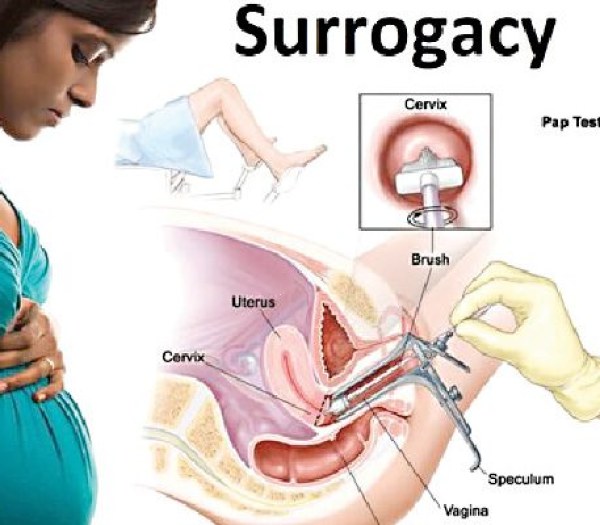
  1. No, never, Islam does not allow surrogacy in any way, because surrogacy is renting a mother's womb, which is gaining popularity in today's world, and in this way, giving birth to a child by using someone else's sperm by renting a womb is not legal in Islam.

    No, never, Islam does not allow surrogacy in any way, because surrogacy is renting a mother’s womb, which is gaining popularity in today’s world, and in this way, giving birth to a child by using someone else’s sperm by renting a womb is not legal in Islam.

    See less